
TALKING EARS
News about Earmark Hearing Conservation and the podcast Talking Ears.
Stage Monitoring with Hearing Loss: Part 2
This article provides practical guidance for performers with hearing loss, as well as supporting knowledgeable audio engineers who are mixing monitors for an artist with hearing loss. For further discussion on the topic, please listen to the Talking Ears episode.
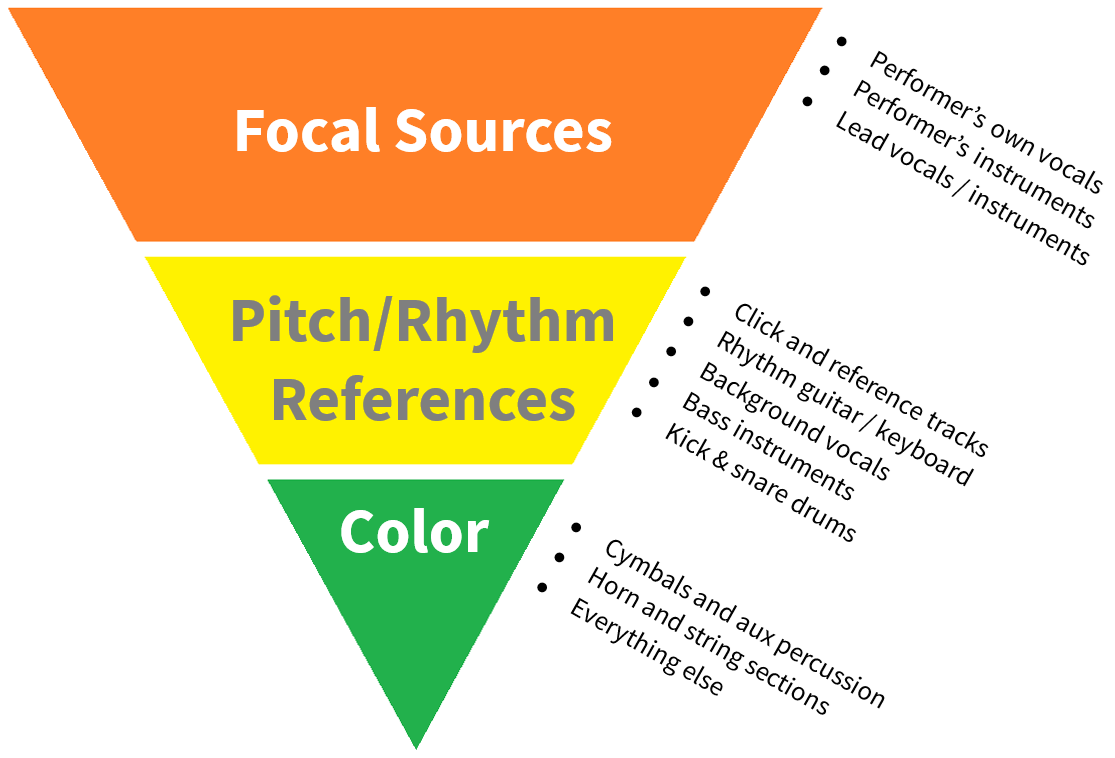
This is the second of a two part article series. We will pick up right where we left off, so if you missed Part 1 you can view/listen here. This section hinges on concepts such as focal sources and mix simplification, which are covered extensively in part 1.
Managing Frequency Space
When mixing stage monitors for performers with hearing loss, several strategies can improve clarity:
High-pass non-critical sources to preserve low-frequency space for kick and bass. This avoids undue interference from the upwards spread of masking when there is too much energy reserved for the low frequencies of instruments and sources that don’t need to have that bass and sub-bass energy.
Reserve low-mid space for focal sources such as vocals, guitar, or keyboards. One can be more liberal with high-pass (low-cut) filters when mixing for an audience of one, so pulling out energy in the 100 - 400 Hz range from non-focal sources will make space for the focal sources to cut through and maintain their pitch clarity.
Manage high-frequency airspace so focal sources remain clear. Same concept as the low-mid space, but using low-pass (high-cut) filters on non-focal sources. This is especially important when working with a high-frequency hearing loss, as competing signals may overwhelm the performer in frequency ranges where the hearing loss is most severe.
Spatial Processing
Panning can be powerful in untangling complicated mixes, but it must be used with awareness of asymmetries in the audiogram. For instance, panning an important pitch reference instrument (bass, keyboards, rhythm guitar, etc) to the ear with more hearing loss can result in a poor listening experience.
If the performer has limited hearing in one ear, they can experience a lack of dimensionality and separation when signals are piled on top of each other. One tried-and-true solution to create dimension is the careful use of short reverbs and delays. These can help perceptually push elements back in the mix, and are best used on non-focal sources.
However, caution should be used when considering aesthetically pleasing long reverb or delays. While these may give a lush listening experience to the audience, the extended tails can muddy the signal for the performer. Hearing loss and recruitment may also limit the audibility of these spatial effects, so they should be used sparingly and with intent to separate, not just to pretty-up the mix.
Output Processing
After simplifying the mix and prioritizing the focal sources, we can get into the business of audiogram-informed processing. These are staring steps, but it is important to consider this a non-linear path with adjustments to all steps being interconnected.
Apply EQ based on the audiogram. A good starting place is the third-gain approach (discussed in part 1), and increasing toward half-gain as needed. When the performer is wearing in-ear monitors, it is important to note any asymmetries and apply different processing to the left and right channels. This can typically be done within a single modern EQ plug-in or outboard EQ unit, but would be difficult to achieve using a simpler analog mixing board master EQ section.
Use multiband compression where significant gain is applied. This is a good place to bring back the tunnel analogy for dynamic range, and respect that folks with hearing loss have reduced hearing real estate available. Experiment with a longer attack and slower release to add clarity and avoid competition of sources. Remember that everyone’s hearing - and hearing loss for that matter - is different, and these settings will need to be explored to optimize the listening experience.
Finish with a peak limiter or multiband limiter to control transients and protect hearing. As with any peak limiting, be careful to avoid aggressive gain reduction as this can negatively impact clarity.
If the results are still unclear, it is advised to reconsider the mix elements and further simplify the sources being presented to the performer.
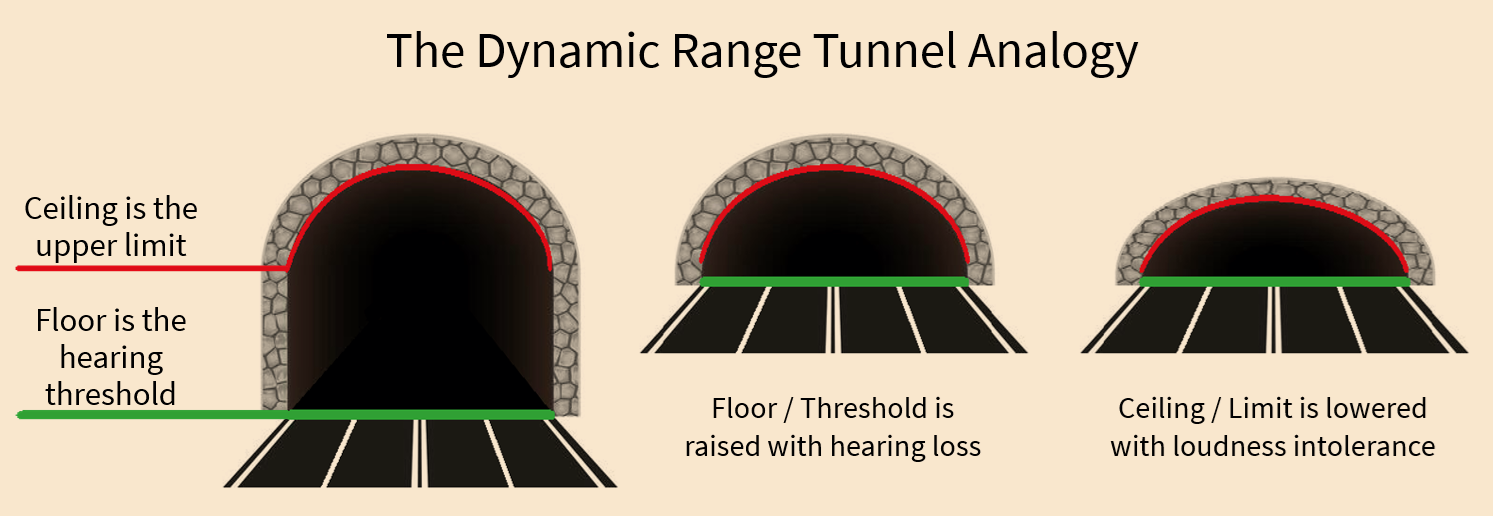
Because the engineer may hear differently than the performer, trust and communication are essential during this process. It is a rare occurrence that the first settings are the final settings.
Hardware Solutions
There are several purpose-built systems which can aid in this process. Disclosure: while we work with these manufacturers and use their systems, we do not get commission or affiliate payments if you were to make a purchase from the below links.
First, the Sensaphonics 3D Music Enhancement (3DME) system is an active-ambient in-ear monitor system that uses ear-level microphones feeding a digitally controlled analog circuit with zero latency and very high headroom. It is available as a universal-fit or custom system.
The system provides a seven-band EQ and adjustable peak limiter, all accessed by a mobile or tablet app. The user can select if processing is applied to the ambient microphones only or to the full monitor mix. Different settings can be stored and recalled, allowing performers to create multiple variations to address rehearsal spaces and different performance environments.
Importantly, the processing can be adjusted independently for each ear, and the system supports CROS-processing for performers with severe or asymmetric hearing loss.
The popular AVIOM A640 monitor mixer includes a new feature called Audiogram EQ.
This system allows users to enter their diagnostic audiogram thresholds, and the system automatically applies EQ, multiband compression, and additional processing, based on its internal algorithm. The performer can then blend the effect from 0% to 100% depending on preference.
AVIOM also includes a self-test feature that measures hearing thresholds through the performer’s actual monitors or headphones. You can read more about how the system works here.
Less Is More
If, after adjustment and experimentation, you still cannot hear what you need to rehearse and perform, consider reducing elements.
There is a large difference between saying “I can’t hear myself” and “I can only hear everyone else.” It is inherently easier to listen through a simpler mix and a less crowded stage.
Continuing the Process
Once a monitoring solution is established, adjustment and experimentation never truly end. The goal is always to support a musical outcome that remains satisfying for the performer, their collaborators, and their audience.
By taking these steps, musicians with hearing loss can continue performing and the world is not deprived of their music, nor are they deprived of the connection and vibrance it brings.
Work with a Music Audiologist
If you need assistance with this process, consider speaking with a music audiologist. Many of us specialize in collaborating with performers, engineers, and hearing-aid audiologists to translate hearing data into practical monitoring solutions.
Music audiologists can be found through the MusicAud.orgnetwork. We look forward to working together to support you and your music!
Stage Monitoring with Hearing Loss
This article provides practical guidance for performers with hearing loss, as well as supporting knowledgeable audio engineers who are mixing monitors for an artist with hearing loss. For further discussion on the topic, please listen to the Talking Ears episode and Part 2 of this article.
Performing music in front of an audience has to be one of life’s greatest joys. For musicians, it is often also necessary for their living and to express themselves artistically. While stage monitoring is a notoriously difficult technical problem with many confounding factors, one significant barrier which is underdiscussed is the performer’s own hearing loss.
In clinical visits, the question often comes up: How can we sustain an active music performance schedule when your ears don’t hear the way others do, or the way they used to?
Adjusting stage monitoring for hearing loss is a highly individualized process that depends on the musical setting, the specific genre of music, the composition of the ensemble, and of course your specific hearing loss. Each poses different challenges and also opportunities to take advantage of various solutions, which may include:
Audiogram-informed EQ and compression processing
Spatial processing
Ambient miking and talkback systems
Purpose-built monitoring systems such as Sensaphonics’ 3DME and AVIOM’ Audiogram EQ
Instrument-specific pickup and monitoring solutions
The goal with all of these methods is the same: to arrive at a clear and functional mix that delivers what you need to hear to perform.
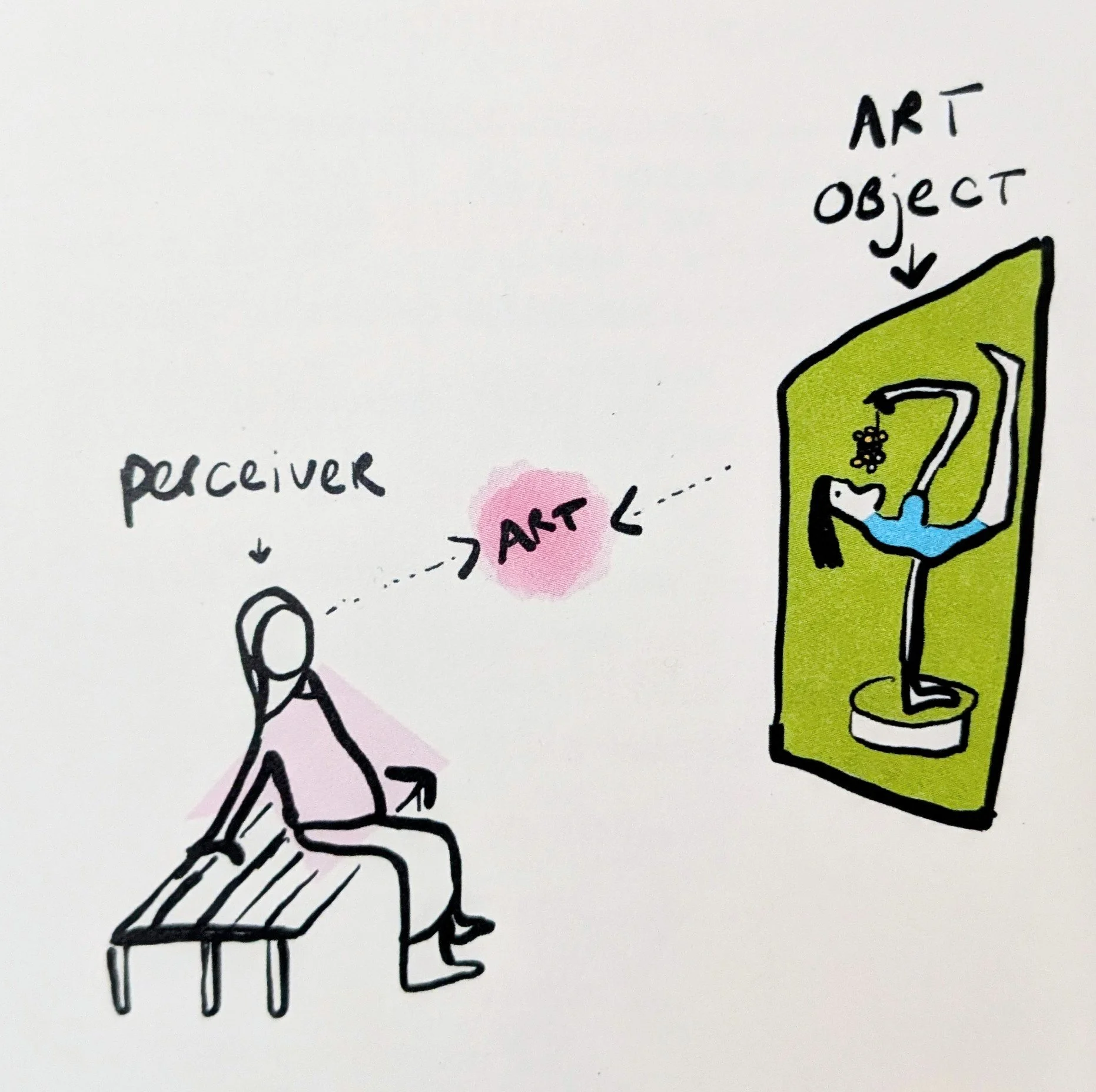
Image credit: Eno, B., & Adriaanse, B. (2025). What art does: An unfinished theory.
This is a good time to mention that our hearing and monitoring also supports connection with the other important people in the room. Of course this includes the ensemble and anyone else who is on stage with you, but less obviously it includes the audience. A performance becomes a glorified rehearsal if we do not consider the audience. Working with musicians - and being performers ourselves - we know that the feedback from the audience is one of the main draws to the stage.
Another important goal is conserving the hearing that you have. Just because you already have hearing loss does not mean it is too late to practice safe listening and hearing-loss prevention techniques. Instead of preventing hearing loss, we shift focus to conserving residual hearing. This becomes increasingly important as hearing loss becomes more severe, since there is less hearing left to conserve and the impact of losing what remains can be profound.
Finally and possibly most importantly, the goal is to arrive at a musically pleasing monitoring solution. When barriers compound, the joy can quickly escape the live performances.
The Floor and the Ceiling of Sensorineural Hearing Loss
Hearing loss comes in several different types, with sensorineural hearing loss being the most common experienced in adults with sound exposure. For this reason, this discussion will focus on sensorineural hearing loss; however, if you or the artist you are working with has a conductive type of hearing loss, there may be a different set of recommendations beyond the scope of this article.
Reduced dynamic range is a hallmark of a sensorineural hearing loss. Dynamic range can be defined as the distance between the quietest audible sound and the loudest tolerated sound.
Analogy Time! You can think of a typical monitor mix like a tunnel that is wide enough to accommodate most, if not all, of the sound sources in a musical setting. The loudest to the quietest - the tallest to the shortest - fit comfortably through the tunnel when one’s dynamic range is in the normal swing of 90 to 120 dB.
Hearing loss, has two major effects on this dynamic range tunnel:
Loss of sensitivity to hearing thresholds. In our analogy, the floor of the tunnel is raised while the ceiling remains where it is. This means the loudest and tallest elements must be squeezed together with the quieter elements just to fit through the newly confined space.
On the other end of the spectrum, loudness intolerance (also known as recruitment or hyperacusis) is also common with most sensorineural hearing losses. These effectively lower the ceiling of the tunnel in the same places where the floor has been raised the most, creating a bottleneck that further complicates monitoring options.
Another barrier is that reliable performance requires control and consistency in environments where stage acoustics and setup can vary widely from venue to venue and night to night. These considerations tend to affect traditional wedge monitors more than in-ear monitors, though both systems have limitations in challenging circumstances.
In an ideal situation there would be a dedicated monitor engineer who understands your hearing loss, knows how to adjust for it in the mix, and is attentive enough to resolve issues that may arise during a performance. If this describes your situation, then share this article with them and reach out if we can support your team further.
Self-mixing, however, requires technical skills to understand the processing involved and access these controls from the stage during rehearsals and performances. Satellite units, standalone monitor mixers, touch screen remote control of wireless mixing boards, and app-based sound controls can reduce this barrier, but they require basic technical skills and - more importantly - a willingness to split attention between performance and technical production tasks.
It’s Not Just About Flipping the Audiogram
The first step in adjusting monitoring to accommodate hearing loss is understanding the audiogram, the term used to describe the hearing test results from diagnostic hearing testing.
Actually, the first step is obtaining an updated audiogram. When you meet with an audiologist, here are several things musicians should ask for based on the Clinical Consensus Document: Audiological Services for Musicians and Music Industry Personnel, published by the American Academy of Audiology (AAA) in January 2020.
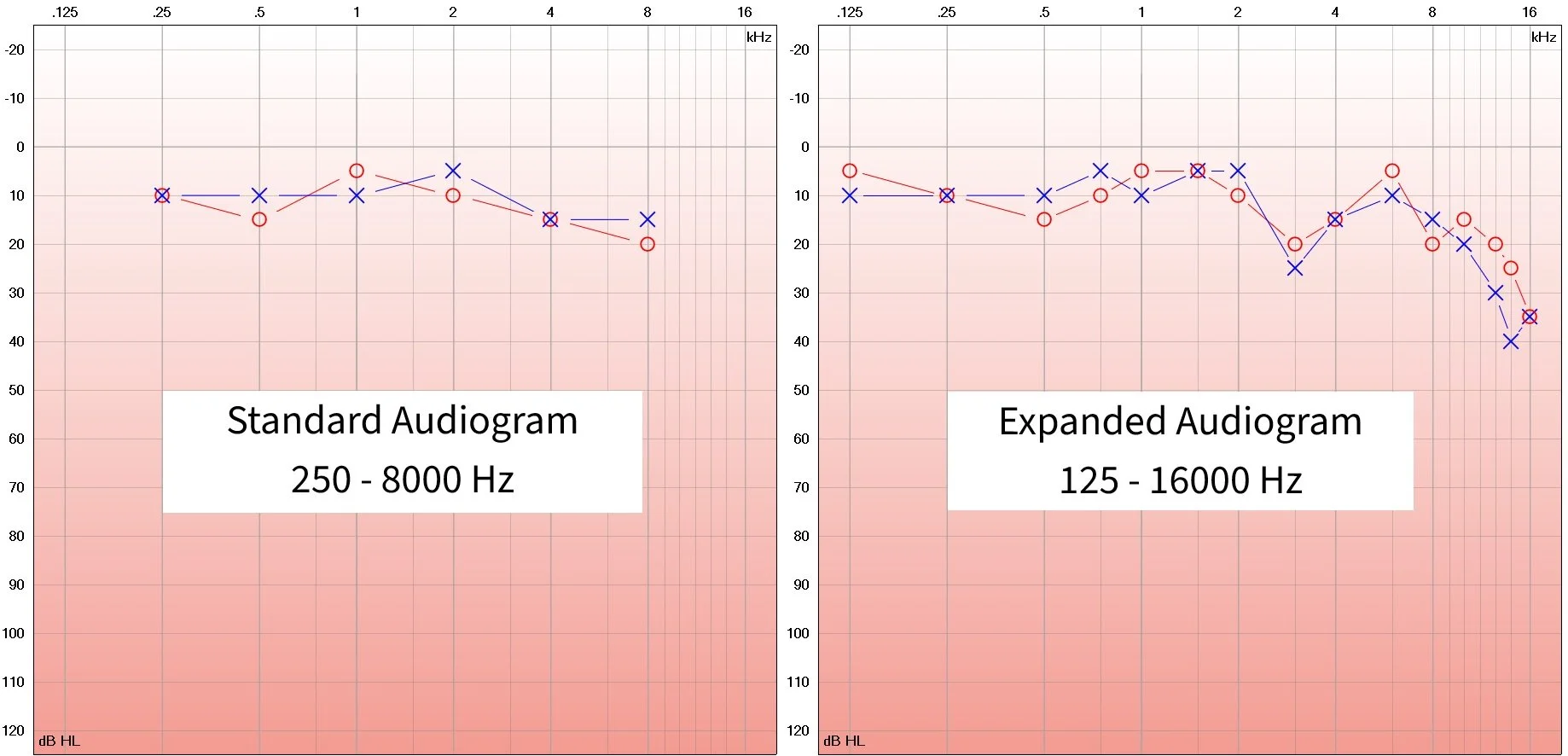
Standard Audiograms test the octaves between 250 - 8000 Hz. Expanded Audiograms, as recommended by the AAA 2020 consensus document, test additional interoctaves and can cover 125 - 16000 Hz.
All available “Interoctaves” Standard audiometric testing is typically performed at octave intervals between 250 and 8000 Hz. In certain circumstances, additional frequencies are added at the half-octaves, including 750, 1500, 3000, and 6000 Hz. These are referred to as interoctaves in audiometric nomenclature. In musical terms they would be considered fifths. The purpose here is to obtain the highest possible resolution for test of a musician’s hearing status.
Extended High Frequencies 8000 Hz is not considered a particularly high frequency in audio engineering terms, but it is the highest frequency tested in standard audiometric exams. Extended high frequencies are available in many audiometers but are not always included in a standard hearing test unless medically indicated or specifically requested. According to the 2020 clinical consensus document, extended high frequency testing up to at least 16,000 Hz is important for musicians and audio engineers who want to understand the upper octave of their hearing.
There is also evidence that this frequency range is more sensitive to damage from sound exposure and may act as an early indicator of hearing injury that does not yet present in the standard audiometric frequencies.
Extended Low Frequency (125 Hz) Most audiometers are capable of testing 125 Hz, a full octave below the lowest standard audiometric frequency of 250 Hz, though it is not routinely tested. For audio engineers, stopping at 250 Hz can feel like being short-changed since that is barely outside the range of low mids. Still, accurate testing below 125 Hz may not be possible in certain clinical settings due to technical limitations of transducers and variability between test environments.
Speech In Noise Testing (QuickSIN) Our ability to parse complex sound settings is based on interplay between what our ears can take in (our hearing sensitivity) and how well our auditory brain can process the signals. Clinical we test this using speech in noise testing, which does exactly what it says on the tin: the patient is instructed to repeat numbers, words, or sentences with progressively more interfering background noise. Musical training tends to improve one’s score in these tests, but significant sensorineural hearing loss can quickly degrade these results.
Uncomfortable Loudness Levels (UCL) Uncomfortable Loudness Levels may help document loudness growth and perceived levels at suprathreshold intensities. Decreased UCLs may indicate decreased loudness tolerance or hyperacusis and may suggest the need for more aggressive compression (more on this shortly) in those ranges. In the authors’ experience, however, these test values are rarely directly translatable into monitoring processing and should be used with caution.
Demystifying the Audiogram
It is important to understand that your audiogram only shows your thresholds of hearing, indicated by a blue X for the left ear and red O for the right ear. These are the softest levels you are able to hear at each test frequency, with a normal range of -10 to 20 dB HL. However, practically all musical monitoring situations occur far above these thresholds. Music performance settings - from solo acoustic rehearsal to a full live band - occur in the range of 70 to 115 dB SPL with very few outliers on either end.
Because of this, the threshold of hearing is only a partial indicator of how to assist someone with hearing loss who wants to monitor music accurately at these higher levels. As discussed, dynamic range often reduces with sensorineural hearing loss so applying one-to-one gain using EQ may “flatten” an individual’s audiometric thresholds, the signal would quickly become harsh, painful, and potential damaging as inputting sounds exceed the quietest audible level.
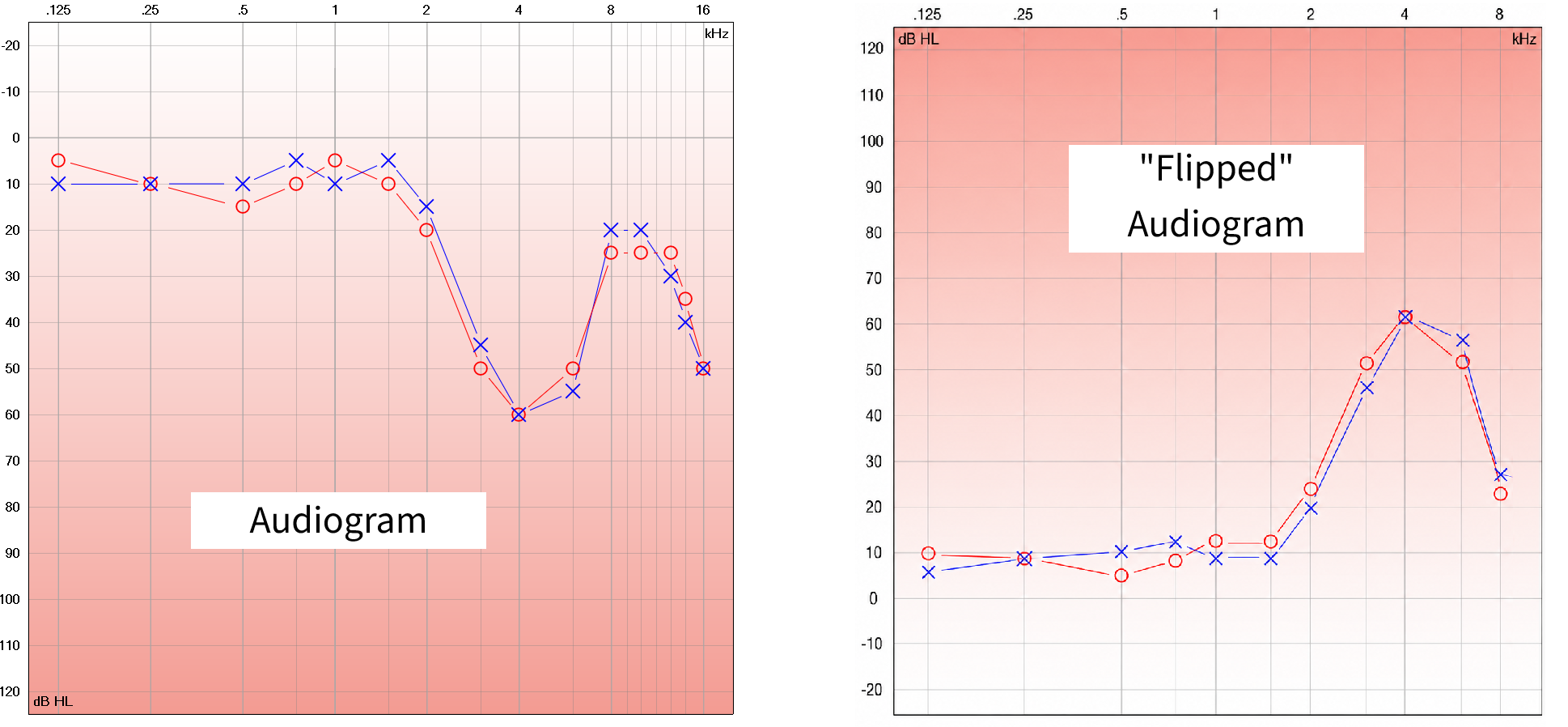
Next, we need to address the upside-down elephant in the room: the audiogram’s Y axis is inverted and displays low intensities at the top and high intensities at the bottom. In this way, a hearing loss is shown as a lowering of the threshold. This is, in a word, confusing. So when we “flip” the audiogram (us the audiometric thresholds to inform EQ and dynamic processing decisions) we are normalizing the orientation to the rest of our audio processing displays.
How Can Hearing Aids Teach Us To Mix Monitors for Performers with Hearing loss??
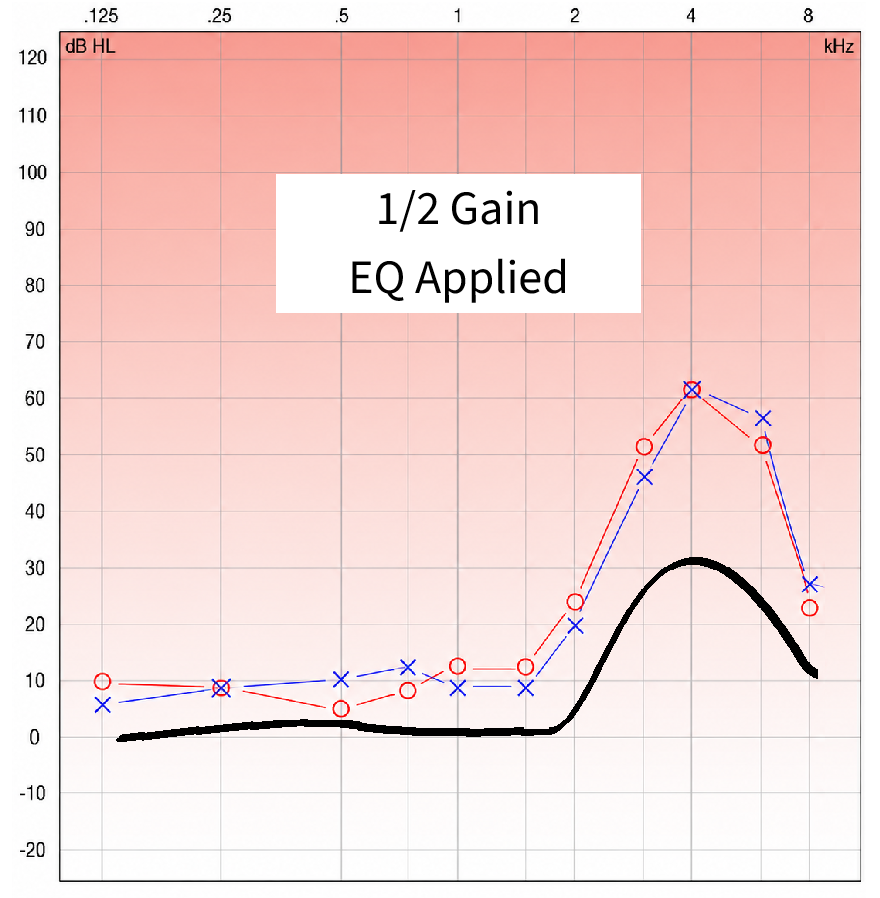
Here we can take some lessons from hearing aid design. Modern hearing aids use complex prescriptive target levels based on decades of research, feedback, and technological advances. While these exceed the scope of this article, we can start with a simple 1/2 or 1/3 gain rule which was historically used as a starting point for amplification fittings.
For example, if a person has a 60 dB hearing threshold, a third-gain rule would apply 20 dB of gain at that frequency, while a half-gain rule would apply 30 dB of gain. The goal was audibility without discomfort.
Modern digital hearing aids instead rely on wide dynamic range compression (WDRC). Compression ratios as low as 1.2:1 or 1.5:1 may be applied across most or all of the signal range.
In other words - and this may make some audio engineers cringe - the compression threshold may be set very low, perhaps at the point of audibility, with the understanding that the compressor will be providing gain reduction nearly continuously. If you find yourself wondering about attack and release times, how the dynamics of music are affected, or how pumping and harmonic distortion are minimized, then you are beginning to understand why music often sounds unsatisfying to musicians through modern hearing aids.
Another reason hearing aids often fall short for music listening is the additional processing designed to improve speech understanding. These systems often include:
Digital noise reduction
Feedback suppression
Speech-focus processing
Adaptive directional microphones
These algorithms attempt to emphasize speech while reducing noise. However, it does not take much imagination to see how this can be counterproductive for musical sources. For instance, an active noise reduction algorithm may hear the sizzle of a jazz drummer’s ride cymbal as unwanted noise and reduce it unnecessarily.
Speech-focus algorithms are actively seeking spoken language and reducing everything else. For instance, the long sustained tone of a flute, woodwind, or operatic singer may be mislabeled as unwanted feedback and the hearing aid may actively suppress them using phase- or pitch-shift algorithms, which can create unpleasant and unmusical effects.
To summarize, traditional hearing aid gain staging is a helpful analogy for mixing monitors for hearing loss, but the advanced processing inherent in modern hearing aids can be counterproductive when the primary source is music.
Solutions: Traditional Mix Management
The primary solution—and something consistent across all options—is traditional mix management. We are taught early on that if something is buried, it is wise to reduce the interference and turn down the overpowering elements instead of turning up the target source. In other words, focus and simplify the mix.
It can be helpful to divide signals into three categories: (1) Focal Sources, such as your own voice and instruments; (2) Rhythm and Pitch References, such as drums, bass, and click track; and (3) Color/Optional Sources, such as horns, strings, and aux percussion. While these color elements add genre-defining favor to the overall musical setting, they are often not mission-critical to a performer’s ability to execute their part. For performers with hearing loss, optional sources can often be muted or significantly reduced.
To Be Continued…
In Part 2 this series, we’ll dive into additional audiogram-informed EQ and dynamics processing, spatial processing, ambient miking, and purpose-built monitoring systems.
If you have any questions before the next section is released, feel free to contact us. Each case is unique and needs individualized attention, and since we’ve seen thousands of cases we can likely help get you on the right track.